

Imagine this: It's 3 AM in the automated pharmaceutical packaging line. Vials whizz past, robotic arms execute flawless pirouettes, and labels adhere with microscopic precision. The entire symphony hinges on the quiet hum of stepper motors, the tireless workhorses translating digital pulses into physical motion. But suddenly, a motor *stutters*. Just a fraction, almost imperceptible to the eye. Yet, that tiny loss of torque stability means a vial isn't quite filled to spec. The whole batch? Compromised. Hours lost. Revenue evaporates. All because the motor's force wasn't rock-solid, unwavering, when it absolutely needed to be. This is the high-stakes reality where torque stability isn't just a spec sheet bullet point; it's the bedrock of reliable automation, the unsung hero ensuring success. 🎯
We often marvel at the speed of modern machinery or the complexity of its programming. Yet, beneath the surface, the consistent, unwavering force exerted by a stepper motor – its torque stability – is the silent dictator of ultimate performance. It's the difference between a machine that merely functions and one that consistently excels, shift after shift, micron after micron. Why does this specific characteristic deserve your undivided attention? Let's delve deep.
**The Unseen Battle: Forces Working Against Stability 📉**
Stepper motors excel at open-loop positioning – moving accurately without constant feedback. But this strength introduces vulnerabilities. Torque, the twisting force driving the load, isn't inherently constant throughout a stepper motor's operation. Several relentless adversaries constantly chip away at it:
1. **The Resonance Demon 👹:** Every motor-load system has natural resonant frequencies. When the motor steps near these frequencies, torque output can plummet dramatically or become wildly erratic. It’s like an opera singer shattering a glass; at the right (wrong) frequency, destructive vibration takes over. This isn't just inefficiency; it's potential motor stalling, skipped steps, catastrophic positioning loss, and audible noise that signals trouble.
2. **The Heat Factor 🔥:** As a motor works, it heats up. Windings expand, magnetic properties subtly shift, and internal resistance increases. This thermal drift directly impacts torque output. A motor performing perfectly at startup might lose a significant percentage of its holding or dynamic torque after an hour of continuous operation, especially under heavy load. Inconsistent cooling, varying ambient temperatures, and duty cycles all exacerbate this thermal dance.
3. **The Speed Trap 🏎️💨:** Torque naturally decreases as step rate increases. This inverse relationship is fundamental physics. Pushing a motor beyond its torque-speed curve for a given load guarantees instability and failure. But even within the \"safe\" zone, subtle variations in torque can occur as acceleration ramps up or down, impacting smoothness and precision during velocity changes.
4. **The Load Fluctuation Challenge ⚖️:** Real-world applications are messy. Friction varies, inertia changes dynamically (think robotic arms changing pose), cutting forces fluctuate, conveyor belts encounter uneven loads. An external force suddenly opposing or assisting the motor demands an immediate torque response. If the motor's torque isn't stable or responsive enough, it yields to these disturbances, causing positional drift or oscillation.
**Why \"Good Enough\" Torque Stability Isn't Good Enough 🚫**
Settling for mediocre torque stability has tangible, expensive consequences across industries:
* **Precision Manufacturing \u0026 CNC Machining:** A micro-drop in torque during a fine finishing pass creates tool chatter, leaving visible marks on a critical aerospace component. Surface finish is ruined. Tolerance limits breached. Scrap rates soar. The machine tool, perfectly calibrated, becomes unreliable due to its unstable power source.
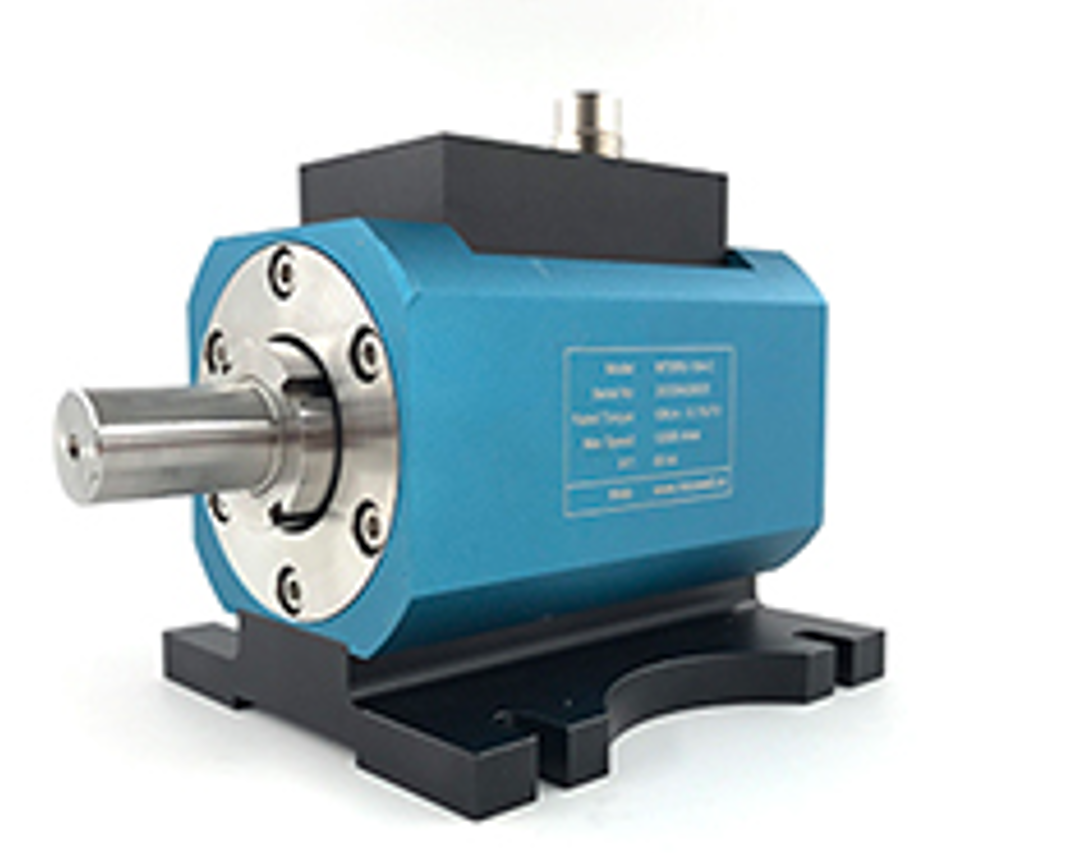
* **Medical Devices \u0026 Lab Automation:** In a DNA sequencing machine, pipetting arms must move minuscule volumes with absolute repeatability. Torque instability translates to inconsistent pipetting force or position, skewing test results. hysteresis brake dynamometer isn't optional; it's life-critical. A shaky motor equals unreliable diagnostics.
* **Robotics \u0026 Automation:** A collaborative robot assisting in assembly relies on smooth, predictable force application. Unstable torque during a delicate insertion task could mean applying too much force (damaging the part or human) or too little (failing the task). Smooth trajectories become jerky, reducing efficiency and potentially causing safety hazards.
* **Packaging \u0026 Material Handling:** On a high-speed bottling line, a labeler driven by a motor with poor torque stability might misapply labels under fluctuating tension or during rapid starts/stops. Reject rates climb. Line efficiency plummets. Downtime for troubleshooting becomes frequent.
* **3D Printing \u0026 Additive Manufacturing:** Layer shifting, poor surface finish, extruder skips – many common 3D printing woes trace back to stepper motors losing consistent torque during direction changes, acceleration phases, or when pushing viscous filament. Print quality suffers dramatically.
**Unlocking Unwavering Force: Engineering for Peak Stability 🏆**
Achieving truly robust torque stability isn't magic; it's the result of deliberate engineering choices and sophisticated control strategies. Here’s how the best motors conquer the challenges:
1. **Superior Electromagnetic Design:**
* **High-Quality Magnets \u0026 Laminations:** Using powerful, thermally stable rare-earth magnets and precision-stamped, low-loss electrical steel laminations minimizes internal energy losses and heat generation. This directly combats thermal torque droop.
* **Optimized Winding Geometry:** Precise winding patterns ensure uniform magnetic fields and minimize inductance variations that can contribute to torque ripple (small cyclic variations in torque within each step).
* **Robust Bearings \u0026 Construction:** High-quality bearings minimize mechanical friction losses that vary with temperature and load. A rigid mechanical structure ensures minimal deflection under load, maintaining consistent air gap critical for magnetic force.
2. **Advanced Microstepping: Beyond Just Smoothness** ➗
Microstepping divides a full step into smaller increments for smoother motion and reduced audible noise. But its profound impact on stability is often understated:
* **Resonance Dampening:** High-resolution microstepping pushes the step frequency far above the system's resonant frequencies for a given speed. This effectively avoids the resonant \"danger zones\" where instability reigns.
* **Reduced Torque Ripple:** By moving the rotor in smaller angular increments, microstepping significantly smoothens the torque output between full-step positions, eliminating the jerky torque transitions inherent in full or half-stepping. This results in quieter operation and reduced mechanical stress.
* **Improved Low-Speed Performance:** Microstepping enhances torque linearity at very low speeds, crucial for applications requiring fine control and smooth starts/stops without cogging.
3. **Intelligent Drive Electronics: The Brain Behind the Brawn 🧠💪**
The stepper driver is the maestro conducting the motor. Modern drivers are pivotal in achieving stability:
* **Sophisticated Current Control:** Advanced algorithms (like Pure Sinusoidal, Space Vector Modulation) precisely regulate the current flowing through the motor windings in a smooth, sinusoidal waveform. This mimics a brushless DC motor, maximizing torque per amp and drastically minimizing torque ripple compared to crude step-voltage drives.
* **Anti-Resonance Algorithms:** Smart drivers actively detect and compensate for resonance. Techniques like mid-band resonance compensation inject specific signals to dampen vibrations before they destabilize the motor, effectively broadening the usable speed range.
* **Adaptive Tuning:** Some drives can automatically adapt their control parameters based on load conditions or motor temperature, maintaining optimal torque output dynamically.
* **High Bus Voltage Utilization:** Using a drive capable of operating at higher DC bus voltages allows for faster current rise times in the windings. This is critical for maintaining torque at higher speeds, overcoming the motor's inductance which naturally resists rapid current changes.
4. **Thermal Management: Keeping Cool Under Pressure ❄️**
Proactive thermal design is non-negotiable:
* **Efficient Motor Design:** Lower inherent losses mean less heat generated in the first place.
* **Effective Heat Sinking:** Motors designed with integrated, optimized heat sinks (aluminum housings, fins) efficiently dissipate heat into the surrounding environment.
* **Forced Air Cooling:** For high-duty cycle or high-torque-demand applications, strategically placed fans can dramatically reduce operating temperatures and maintain torque stability.
* **Temperature Monitoring \u0026 Compensation:** Advanced systems can monitor winding temperature and subtly adjust drive current to compensate for thermal effects, maintaining consistent torque output across the operating range.
**The Tangible Payoff: Investing in Stability Pays Dividends 💰**
Choosing a stepper motor solution engineered for exceptional torque stability isn't just about avoiding failure; it's about unlocking peak performance and realizing significant operational advantages:
* **Uncompromised Precision \u0026 Repeatability:** Achieve micron-level accuracy consistently, batch after batch, day after day. Eliminate scrap and rework caused by positional drift or inconsistent force application. Build a reputation for flawless quality.
* **Enhanced Reliability \u0026 Uptime:** Minimize unexpected stops, motor stalls, and skipped steps. Reduce costly production downtime and emergency maintenance calls. Maximize overall equipment effectiveness (OEE). Operators sleep better. Managers hit targets.
* **Superior Throughput \u0026 Efficiency:** Confidently push machines to their optimal speed limits without fear of instability-induced failures. Smoother motion profiles reduce mechanical stress and wear, extending the lifespan of the entire mechanical system. Accelerate production cycles safely.
* **Reduced Audible Noise \u0026 Vibration:** High stability, achieved through microstepping and resonance control, translates to significantly quieter operation. This improves the working environment, reduces fatigue, and minimizes noise pollution concerns in sensitive settings like labs or offices.
* **Simplified System Design \u0026 Tuning:** Stable motors are more predictable and forgiving. They reduce the need for complex closed-loop feedback systems in many applications where open-loop steppers are preferred (simplicity, cost). Commissioning and tuning machines becomes faster and less error-prone. Maintenance headaches shrink.
* **Future-Proofing:** As applications demand higher speeds, greater precision, and integration into more complex systems, starting with a foundation of rock-solid torque stability provides crucial headroom and adaptability. It avoids costly retrofits down the line.
**Choosing Wisely: Questions to Ask Your Supplier 🤔**
Don't just accept generic torque curves. Dig deeper to ensure genuine stability:
1. **How is torque stability characterized?** Ask for detailed torque-speed curves at different temperatures, not just room temperature. Look for data showing torque consistency across the operating range.
2. **What specific anti-resonance technologies does the driver employ?** Get details on algorithms like mid-band compensation and how they are implemented.
3. **How is thermal management handled?** Inquire about motor thermal resistance ratings, heat sink design options, and cooling recommendations for your specific duty cycle.
4. **What is the microstepping resolution and quality?** Higher resolution (e.g., 256 microsteps/step) is generally better, but the *quality* of the microstepping current waveform (sinusoidal vs. trapezoidal) is paramount. Ask about the drive's current control technique.
5. **Can you provide application examples or case studies in demanding, high-precision environments similar to mine?** Real-world proof is invaluable. Ask about performance under fluctuating loads or in thermally challenging conditions.
6. **What level of support is available for tuning and optimizing the motor/drive system for my specific load dynamics?** Achieving peak stability often requires some expert tuning.
**The Unseen Foundation: Torque Stability as Competitive Advantage 🚀**
In the relentless pursuit of manufacturing excellence, lab automation breakthroughs, robotic dexterity, and packaging perfection, the components that deliver unwavering, consistent force are paramount. The stepper motor, often hidden away in machine enclosures, plays an outsized role. Its torque stability is the linchpin holding the entire operation together.
It’s the difference between the frustration of troubleshooting intermittent failures and the satisfaction of predictable, peak performance. It’s the margin that ensures a machine consistently meets or exceeds its specifications. It's the confidence that allows engineers to push the boundaries of speed and precision.
Look beyond the basic specs. Demand demonstrable torque stability. Invest in the silent powerhouse that delivers relentless, unwavering force, precisely when and where it’s needed. Because in the high-stakes world of motion control, stability isn't just an option; it's the ultimate competitive edge. Build your success on a foundation that doesn't waver. ⚙️🛡️🏆